I saw this video the other day, and it reminded me of what it was like when I read my first gay erotic romance: like I had found my place in the world.
or watch on YouTube
Then as I started writing erotic books featuring gay love stories, I found myself even more comfortable and at ease. And not just with my writing. I was where I belonged.
Writing for publication, although very rewarding, is a long, often times very lonely and challenging career path. I truly believe you have to have a great deal of passion for what you’re doing to keep forging ahead. You have to feel like it’s what you were meant to do.
You have to feel like you’ve found your place in the world.
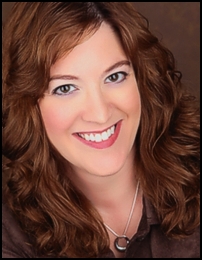
Award-winning author Sloan Parker writes passionate,
dramatic stories about two men (or more) falling in love. Sloan enjoys
writing in the fictional world because in fiction you can be anything,
do anything...even fall in love for the first time over and over again.
She lives in Ohio with her partner and their neurotic cats where her
greatest moments in life are spent with her family, her friends, and her
characters. You can learn more about Sloan and her writing at www.sloanparker.com.
Showing posts with label writing. Show all posts
Showing posts with label writing. Show all posts

Feb 14, 2013
On Writing: The Essence and Passion of a Story

Last year Pixar storyboard artist Emma Coats tweeted 22 rules of storytelling. Now that I’m knee-deep into a first draft again (writing the sequel to my m/m/m menage MORE), I keep going back to some of those tips she mentioned when it comes to the basics of storytelling.
Two of my favorites are:
“Why must you tell THIS story? What's the belief burning within you that your story feeds off of? That's the heart of it.” -- Emma Coats
“What's the essence of your story? Most economical telling of it? If you know that, you can build out from there.” -- Emma Coats
I think these go hand in hand when writing a first draft. I have to know the basics of what I’m trying to say and I have to be driven to share that story. I believe if the author lacks a passion for writing any particular story, the readers can tell.
When first starting a novel-length book, if I don’t have a firm grasp on the core concept of the story as well as the passion to tell that story, I stumble my way through the first draft, going back over the plot outline and who the characters are at their core until I land on the truth of what I’m trying to say.
Some questions I ask myself:
- Who are these men? What do they believe about love? What goals do they have in life? What are their biggest dreams? What are their biggest fears? All of these can help drive the plot.
- What are the basics of the plot in one sentence? One paragraph?
- What is the ending of the story? What happens just before the ending? How are the characters emotionally impacted by the conclusion of the plot?
- What in my own life (what experiences, dreams, hopes, imaginations) is influencing me to write this story?
- What is it about my own beliefs and passions about living life that stirs me to write this story about these characters?
For me the journey of discovering all this is what makes storytelling such a powerful, enjoyable experience. It may stretch out the process of writing that initial draft, but I think my stories would not be the same (and neither would I) without it.
You can read the full list of Coats’s tweets here:
The 22 rules of storytelling, according to Pixar
Award-winning author Sloan Parker writes passionate, dramatic stories about two men (or more) falling in love. Sloan enjoys writing in the fictional world because in fiction you can be anything, do anything...even fall in love for the first time over and over again. She lives in Ohio with her partner and their neurotic cats where her greatest moments in life are spent with her family, her friends, and her characters. You can learn more about Sloan and her writing at www.sloanparker.com.
Nov 8, 2012
The only easy day was yesterday

No matter how much I love writing, some days I can really relate to this quote.
“The writing process for some books is the equivalent of hitting ourselves in the head with a sledgehammer over and over and over. Being a romance author is not unlike being a Navy Seal. The only easy day was yesterday.” -Suzanne Brockmann
Each part of the writing process has its own challenges and rewards. Some writers find the first draft the most enjoyable and inspiration-filled time, while others find that the revising and editing is where they love storytelling the most. For me, the latter is where the real creative breakthroughs happen. The ones that inspire me to keep on writing, where the little bits of dialogue and character interaction and setting details start to come together to make the story about something more powerful and engaging than the original draft, where everything comes alive.
Regardless of where I’m at in the creation process, filling a blank document with more than 80,000 words can be challenging, to say the least. Turning those words into an entertaining story seems impossible when I’m first staring at a blank document. Each and every time I get to the end and re-read a finished manuscript, I am still amazed that I did what I set out to do. I took the spark of an idea and turned it into characters who feel like real people to me, men who are experiencing the ups and downs of life while falling in love.
It’s such a rush to be a writer of fiction!
But yeah, the only easy day was yesterday. Because when I get to the end of a manuscript, I’m often left wondering...how the hell did I do that? And can I do it again?
All I can say to myself is that I’ll find out. I have every intention of taking the ride once more.
Get the sledgehammer out because I’m going again!
Sloan Parker has been writing and playing with fictional characters for years, but she finally found her true passion when she began telling stories about two men (or more) falling in love. Now she spends her writing life creating m/m erotic romances and romantic suspense. She loves to explore the lives of people who are growing as individuals while falling in love. Her greatest moments in life are spent with her family, her friends, and her characters. www.sloanparker.com
May 10, 2012
Three-Word Scenarios

As much as I love playing with words, I’m really a visual person. A candid photo of a stranger’s life, a run-down abandoned building, a snippet of a news story, or the physical gestures between two people I’ve never met are usually the kinds of things that spark an idea for a new story. Yet, sometimes it can be words that inspire new ideas and stretch my imagination like nothing else.
I enjoy writing novel-length stories, but the time between the initial surge of creativity for new storylines and characters never comes quickly enough to please my imagination. In an effort to exercise the creativity of brainstorming new ideas, I’ve started a topic on my blog called three-word scenarios.
The idea came out of an interview I did at author Julie Hayes’s blog. One of the questions she asked was Take these three words and give me a 100 word or less scenario using them: concert, documented, broadcast.
Here’s what I came up with for Julie’s words.
Today, I thought I’d share my next three-word scenario, the first of the new segment I’ll be continuing at my blog. I’ve decided to limit my scenarios to 200 words or less.
My sweetie picked the three words this time around. I don’t think she went easy on me. Since I write contemporary and usually think in those terms, the first one was definitely a challenge. The words are:
Aliens
Candy Canes
Blue
The scenario I came up with is more the start of something, or perhaps the ending of an m/m romance between friends, a sweet moment in time that could lead to more.
Christmas Eve. Out first together in a real home.
Outside it was raining, the ground covered in mud—not the snow I’d always imagined—and Tommy was late getting home from work. I shouldn’t have been this happy. I shouldn’t have been sitting on the floor of the living room staring up at the Christmas tree with its blue twinkling lights and candy canes, smiling like peace on earth really was just a wish away.
I carefully secured the end of the wrapping paper around the 1970’s alien action figure set. A garage-sale find that had taken me four Saturdays of walking through one suburban housing development after another, scouring through boxes of old toys in search of the little plastic green aliens. Tommy’d had the same set as a kid. Since we’d both run away from less-than-stellar homes as teens, neither of us had any childhood mementos to remind us of the few good days we had in our youths.
The smile grew as I imagined his face when he opened the box.
My first gift for him. The first time I’d had money to spend on something this frivolous. Only, to Tommy it wouldn’t be that at all.
Word Count: 200 (just made it!)
Dang, now I have a new story I want to write.
Anyone have any ideas for what three words I can use next time around?
Sloan Parker
www.sloanparker.com
Apr 12, 2012
How Not to Write

I don’t get writers block very often. Usually it’s a brief (or a bit longer) pause of not knowing how to describe something. As someone who outlines, I usually know where I’m going with a story. Even if that story unfolds differently than I planned, the outline always gives me a goal to write toward for each scene.
When moments of being seriously blocked happen, I try to push on through and get some ideas down so I can move on to the next part of the story where I won’t be as blocked. I can always revise later (I revise like crazy anyway), but at least I’m moving forward.
However, there are times when my creativity is blocked so badly when I’m writing an outline or a first draft that I’m staring at the blank page in terror. In those moments, I find it’s important to have a plan.
Sloan’s 20 Steps to Dealing with Writer’s Block (Do not try this at home):
1) Grab some SUGAR! Nothing gets me hyper like sugar. Hyper Sloan can type faster. Even if the words make no sense, at least I feel a sense of accomplishment as my fingers fly over the keyboard.
2) When my fingers slow again, take a break and browse Tumblr. Some of my followers post the best stuff for inspiration. But that usually leads me to writing a sex scene and I’m not often blocked when writing sex. Time to get back to the scene I want to write.
3) Have more sugar.
4) Browse Twitter. Oh, look there’s a great picture of two guys driving down the road on motorcycles, both in tuxes.
5) Start brainstorming a new story about a couple of newlyweds.
6) Damn, this is not the time for a new story. Must focus on something else.
7) Look around the house at the 56 unfinished projects I never seem to find time to complete (like that envelope of photos that need to go into an album, that pile of clothes to sort through and take in for donation, and the huge stack of papers that need filed). Pick up one of the projects that looks most appealing.
8) Five minutes later, stop working on said project once I remember why I never finished it in the first place. Writing is more fun. Even if I’m blocked.
9) Okay, more sugar and back to the story.
10) Try interviewing my characters. “What’s on your mind? What are you feeling right now? What do you want to do? What do you wish I’d write about for you?”
11) Tell them to shut the hell up when all they answer with is SEX. This is not the right time for them to have sex. Or I probably wouldn’t be blocked. Sheesh.
12) Browse through my outline for an upcoming scene that will spark my creativity and get me excited to write this story again.
13) Throw the outline across the room when my inner critique tries to tell me I suck.
14) Open my email and read a couple of the lovely messages I've received from readers who’ve enjoyed my work. Remind myself: it’s not just me that I’m writing this story for. (THANK YOU, readers!!)
15) Open the document and stare at the blank page again. Talk about pressure!
16) More sugar.
17) Pet the cat. This calms me down after too much sugar.
18) Fall into a heavy sugar-induced sleep.
19) Wake up and start again.
20) Repeat as needed.
Thank God I have more “good” writing days than “bad” ones. The bad days are exhausting.
Sloan Parker
www.sloanparker.com
Feb 18, 2012
Favourite Words
Authors love words. That’s almost the whole point of our being, right? And I’ve discovered during edits that there are words that I use more than others. Most of those words aren’t any fun, though. Fun words, though… there’s a lot of them and I’d say my favourites change under the different circumstances.
Recently I came across a word I learned from my dad when I was a kid. It’s one of those words that, these days, would require too much explanation to use in a book, but I love the way it looks and the way it sounds in my mouth. Widdershins. Means counter-clockwise, so really, it’s hardly worth the explanation.Of course, I do also love swear words in all their glory… and if you’ve read any of my stuff, you know that. My lovely editor has even had me take out some from a few manuscripts. But I’m not particularly creative when it comes to the swear words. I have two friends who are stellar at that particular subset of creativity. I still haven’t managed to shoe in very many of their offerings, because calling someone a twatwaffle requires a very specialized set of circumstances. But rest assured, I will! Seriously, that word amuses the crap out of me.
Anyone care to share their favourite words?
Oct 13, 2011
You Are Already Naked

It feels good to be getting closer to the completion of this project. Take Me Home was an unexpected story for me and definitely threw my goals off the original plan for 2011. I’m okay with that, though. I’m extremely proud of how this one turned out. It did, however, mean I had to put a hold on my other manuscript and thus put a longer gap between my releases than I would have liked.
For that reason, and the many other roadblocks that we writers face, it can be easy to get discouraged in this business and give into the fear that comes with putting your creativity out into the world.
The quote below started making the rounds again after the recent passing of Steve Jobs. I think it’s a great quote for anyone who has a dream of accomplishing something but are afraid to try, to put themselves out there where failure is a real possibility, especially public failure. As an author, I can relate to that fear. Most writers live with it on a continual basis.
"Remembering that I'll be dead soon is the most important tool I've ever encountered to help me make the big choices in life. Because almost everything—all external expectations, all pride, all fear of embarrassment or failure - these things just fall away in the face of death, leaving only what is truly important. Remembering that you are going to die is the best way I know to avoid the trap of thinking you have something to lose. You are already naked. There is no reason not to follow your heart."
- Steve Jobs in a commencement address at Stanford in 2005
Fear (of failure and success) can be a part of what makes it difficult to push forward with any goal. One way to look at it is along the lines of what Steve Job was saying: in the end what do you really have to lose by trying? Another way to look at it is that most accomplishments require a series of tasks. Break down a goal into tasks and it becomes less frightening and more manageable.
Very few writers can create a publishable first draft. And those who do often edit and revise as they write that draft. They have a process that involves re-reading their work as they write, either chapter by chapter or at the beginning of a writing session or whenever they get stuck and need to go back over what they’ve written. It varies for everyone. Even with creative endeavors there are steps that one can take, a process that works for the individual writer or painter or musician or whatever, and moving forward with those steps is the way the end result is achieved.
That’s how many goals are accomplished, how dreams are discovered. Through creativity, diligence, and perseverance.
Just think about where Steve Jobs (and Apple co-founder Steve Wozniak) started with Apple and how far personal computers advanced during his lifetime. Sure, he was only one part of that achievement, but the advancement of the technology does illustrate how far a dream can go.
FROM THIS...

1976 - Apple I
Photo Credit: Flickr/Ed Uthman
TO THIS...

2010 - iPad
Photo Credit: Apple
So, for all of you out there with a dream to achieve a specific goal—whether it’s writing or mountain climbing or losing weight or anything else—I hope you see that you are already naked and decide to give it a try.
“To reach a port, we must sail—Sail, not tie at anchor—Sail, not drift.”
- Franklin Roosevelt
Sloan Parker
www.sloanparker.com
Sep 17, 2011
The Bitchy Manuscript
Trompe L’oeil is finally here! Which I’m thrilled about. But it was a struggle to get here. Almost exactly a year ago, I was blogging about how many difficulties I had with it. There were a number of things I did differently for this book, all of which combined to make the process more painful than I expected. Don’t get me wrong. I love writing. I love meeting new challenges and expand ing my horizons, stretching my boundaries. But doing so many different things at the same time was… perhaps not the wisest thing I could have done for my psyche.
 ing my horizons, stretching my boundaries. But doing so many different things at the same time was… perhaps not the wisest thing I could have done for my psyche.
When I start a story, I usually imagine a scene somewhere in the middle of the book, and I have to figure out who the people are, how they got there, and how they’re going to get their happily ever after. For this one, I came up with the overall concept first. And oh boy, from a couple of paragraphs, it seemed like a great idea. I still think it is a great idea, but I didn’t anticipate how difficult it would be having two people fall in love when they can’t interact… at all… with each other. Tricky, tricky…
Part of the pertinent back story occurs during the Great Depression. I have a history degree, where I specialized in the medieval era. I have ZERO knowledge of the Great Depression. So, that meant a bunch of research I hadn’t anticipated. Oh, and one hero is a painter. I also know zip about art.
I ALWAYS write linearly. One scene after the other, all the way through. This one, no. For some reason, I chose to pop around. Write a scene near the beginning. One near the end. It messed my head up something fierce.
Then there’s the title. Trompe L’oeil. I’m glad Loose Id agreed it was a good title for the book, but I worried about it. I still worry about it. Despite not being an artist, I’ve been familiar with the term for a while. It means trick of the eye, often referring to an optical illusion a painter has created by manipulating perspective. I’ve never felt so strongly that a title fit a manuscript of mine. But, is it off-putting for readers? I sincerely hope not.
And, not least, the story isn’t a typical romance. It’s not a typical voyeurism story either, but that was the word which prompted the idea. There’s a love story. There’s a happy ever after. But the path to get there? Bends a few rules governing reader expectations for erotic romance. I hope people will understand that the very thing that makes the romance atypical is also the very thing that makes the story so potentially tragic. It’s the biggest obstacle in the book, the biggest conflict for the lovers. So, despite the hassle the story gave me, I'm hoping people will understand, give me a little latitude, and love the book like I do.
Anyone got any stories like that? The ones that take it out of you, even though you weren’t expecting it?
Jul 14, 2011
Here Comes the Snow...in Summer
 I’m getting to the end of another round of edits to my current manuscript. Part of this book takes place during a blizzard that lands on top of my two heroes as they travel across the US to celebrate Christmas with their families. Well, here in Ohio it’s the middle of July and 80° F outside. Not much going on in the way of snow or Christmas.
It can be a challenge to add in the layers of sensory descriptions that give the story a sense of time and place when you’re ready to hit the pool while your characters are slogging through the snowdrifts.
But that dichotomy can make writing about a particular setting an engaging challenge. By writing about a time and/or place I’m not currently (or have never been) familiar with, I get a chance to do a little research, get inspired, and think outside the box in order to find a unique, vivid detail that will help ground the reader in the scene.
I’ve talked before (and maybe even on this blog) about how I like to use photos for inspiration, especially for settings. Here’s what helped me get in the spirit of winter and all things Christmas:
- I searched for winter and Christmas images at stock photography sites, Google Images, and other photo sites like flickr.com to help spark my creativity.Had it been winter here in Ohio, I might not have gone to such lengths to get inspired, and I may have missed opportunities to push my descriptions past what I usually think of in terms of Christmas and the winter weather.
- While browsing the pics I kept a list of details that came to mind (including scents and sounds) and then related the most relevant ones to my character (his past, present, and future) and how he might emotionally react to each detail.
- I had the fan blowing on my face while I viewed the photos. Gave me that nice cool feeling that helped me forget it was hot outside. It was almost like being in the middle of a blizzard. Almost.
- Oh and I sang along with Christmas carols on my iPod. Because that’s just fun.
Of course, I hope I always push to write interesting setting descriptions, but this time around I’m glad I had a chance to write about winter in summer.
I'd love to hear other ideas...how would you get into the holiday spirit mid-summer?
Happy Holidays (a little early)!
Sloan Parker
www.sloanparker.com
Apr 14, 2011
The Record of a Moment in Time
“Man is least himself when he talks in his own person. Give him a mask, and he will tell you the truth.”
- Oscar Wilde
“All we see of someone at any moment is a snapshot of their life, there in riches or poverty, in joy or despair. Snapshots don't show the million decisions that led to that moment.”
-Richard Bach
Sometimes what we say or do when we think no one is listening or looking speaks volumes, but does it speak the truth we want others to know about us?
Have you ever kept a journal or diary, writing down your daily activities, thoughts, inspirations, dreams, or even your innermost secrets? Did you ever wonder what others would think if they read about your life via your own words, either now or after you’re gone?
Even if you are writing for yourself, I think it’s common for anyone keeping a journal to consider what an unintentional audience might contemplate about you if they came across your private reflections. Would they ponder why you chose to write about the subjects you did? Would they laugh at you? Cry? Feel a connection to you in a way they hadn’t before reading your secrets? Would they find you boring or fascinating? Strong or weak? Redundant or insightful?
A big part of the plot in my current work-in-progress revolves around a sixty-year-old journal written by the grandfather of one of my main characters. The grandfather’s stories, lessons, and secrets in this journal have the potential to do more than connect a man to his deceased grandfather. They have the power to change the course of several lives.
In a scene I was working on the other day my character Kyle reads an excerpt from the journal which helps him solve a problem he’s been living with for a year. Had those same words been written by anyone other than the grandfather Kyle had admired and loved, they would not have held as much power to influence his life. For him, the meaning and impact was based on the source. His connection to his grandfather mattered greatly in how open he was to the message hidden in the daily excerpts.
It’s been an interesting experience writing the journal snippets that are woven into the main story. Not only did I have to be in the head of my character reading the words left behind by his grandfather, but I also had to get into the heart and soul of the conflicted twenty-year-old man who lived through the experiences sixty years earlier. It got me to thinking about whether or not I’d want to find a journal—the private thoughts and feelings—of someone I had loved but lost. What about the grandparents I had only known during their retirement years? What about my childhood friend who died at the age of seventeen? Would I want to see their daily musings, joys, disappointments, rants, and mistakes? Or would that create too much of a potential to alter my memory of who those people were to me? Perhaps those are questions that can only be answered after the experience of reading such personal reflections has occurred, but then the words cannot be unread.
Do you think you’d like to read a journal written by someone you’ve lost? Have you ever come across the words of a loved one after they’ve passed away? Was it a positive or negative experience to examine their private world? I’d be interested in hearing about your experiences if you’d care to share.
Thanks,
Sloan Parker
www.sloanparker.com
Feb 28, 2011
What's in a Name?
Last week on my new website, I asked about euphemisms for semen. There are people who prefer "cum," and those who can't help but think "...feel the noiz, girlz rock your boyz" when they see it and prefer "jizz" or "seed" depending on the circumstances.
How about you, Loose Enders? Whether you're a reader or a writer, what do you prefer to call semen? Does a contemporary or historical setting make a difference?
How about you, Loose Enders? Whether you're a reader or a writer, what do you prefer to call semen? Does a contemporary or historical setting make a difference?
Feb 23, 2011
A Question of Age
This is something I’ve been pondering while working on a new book, and I’m conducting an informal poll around the blogosphere. As long as a character is 18, are you okay with reading about him or her in sexual situations? Or is that still too young? What’s your threshold? 18? 19? 20? Older?
And does it change when the story is historical rather than contemporary? Is having a 17-year-old hero or heroine okay in a historical depending on the mores of the time period? Does the age of the other half of the pair come into play? Say, two 19-year-olds is okay, but a 19-year-old with a 30-year-old makes you uncomfortable? Does gender make a difference?
Does the plot matter? Would a BDSM story with an 18-year-old be off-putting while a sweet, traditional romance be fine?
Or does age not particularly matter at all as long as it’s a compelling, well-written romance?
Jan 13, 2011
The Big Picture: Some Things Do Get Easier
 With the start of 2011 came the revising phase of the two erotic romances I’ve been working on for the past few months. One is a suspense featuring Walter Simon from MORE; the other is a friends-to-lovers story, and both include a passionate romance that steams up the e-reader (or so I hope).
Since revising is where most of my energy is focused lately, that’s what today’s post is all about.
I’ll be editing these manuscripts for a while before I dig into a new project, but that doesn’t bother me. I enjoy going over and over a story, adding in the little details that build stronger characters and increase the emotions and sexual tension.
One of my writing goals for this year is to write faster, which means producing fewer drafts for each project. I thought I did pretty well on these latest “first drafts” until I started reviewing one of the manuscripts. There are more plot and pacing revisions needed than I had expected.
It’s not a bad thing, though. With one day of frustration and three productive days of making revision notes, I’ve figured out some of the issues. I feel good about that. There are many times I’m too close to my work and can’t see the big picture. I’m hoping this means I’m getting better at objectively examining my writing.
Working out these issues has taught me a few things:
1) It gets easier to cut scenes.
Not sure if it’s because I’m cutting scenes early in my self-editing process or because after working with Loose Id on two books, I’m able to see issues more clearly and accept that the story will be stronger if I make the cuts. Whatever the reason, I’ve spent the last two days cutting and combining scenes, and I can see the improvements at a higher level.
2) Listen to my internal reader.
When writing a scene, I shouldn’t focus solely on whether the scene is right for the story (is it moving the plot along, is it building characterization, etc.) but also ask myself if it’s a scene readers will find interesting. The most important scene for the story’s plot may very well be the most boring, non-essential scene for a romance reader.
3) Listen to my gut.
If my gut tells me to veer off the planned outline, I should do it! Many writers who plot out their books beforehand will admit this is an important point to accept when it comes to effective plotting, and I was reminded of that this week. Sometimes even the best laid plans need to be revised once they are put into action.
4) Magical things happen after that first draft.
As I took note of the necessary revisions and locations for adding details, I could see the story strengthening and was reminded that layering in emotions and characterizations is what makes a story unique. This is the part where I love being a writer.
So yeah, it might take some time to get these books ready to submit to my editor, but I feel like I’m on the right path and that’s a great place to be.
Sloan Parker
www.sloanparker.com
Dec 14, 2010
The Eleventh Hour Ice Prince, or, How I Learned to Stop Worrying and Love Serendipity
 Hi, I'm Jessica Freely, and my new release, The Ice Prince, wasn't always The Ice Prince.
It was originally entitled Out of the Box, which went great with the story I thought I was going to write when I proposed it in June. You know how these things go. You do a little research and you find out that your fabulous idea for how to solve a story problem just isn't going to work, and then you come up with something new and the story goes in a different direction than you'd planned.
Out of the Box was like that. When I zigged, it zagged, and as a result, I did a lot of work on it in the revision phase. In fact, at one-thirty in the morning of the day it was due, I rewrote a crucial scene and finally achieved the sense of emotional catharsis I'd been aiming for all along. Talk about bringing it in under the wire.
I won't spoil things by telling you which scene it was, but I will say that once I wrote it, it became obvious to me what the title of the book should be.
The Ice Prince is just out from Loose Id today:
http://www.loose-id.com/The-Ice-Prince.aspx
Below is a never-posted-before excerpt from The Ice Prince. But first, you might also like to know that I have a free ficlet about the main characters, David and Seth, entitled Raspberry Chocolate-Chip Scones, available exclusively on my newsletter group:
http://groups.yahoo.com/group/jessicafreely
Blurb:
Together David and Seth have forged a life full of love, friendship, and scorching hot sex. But secrets from David's past could turn it all into a frozen wasteland unless he can break his habit of silence. The Ice Prince is a sequel to Hero and Rust Belt.
Excerpt:
Haverstock Bookshop was dead. All morning long, not a single customer entered the store. As the minutes ticked by, David fancied he could hear the money for the shop’s overhead -- the heating, the electricity, hell, his salary -- trickling down the drain. He surfed the Internet, looking at Web sites for other small independent bookstores, hoping to glean some pearl of wisdom that would enable him to save this place. It wasn’t much help. A lot of the sites were antiquated, even by his standards, and several were defunct.
“This is too depressing,” he muttered and exited the browser.
He felt like he needed to move around, so he started cleaning. While dusting, he found a loose shelf in the romance section. He went into the back room to find a hammer and nails.
It was Mr. Haverstock’s day off. David's footsteps scuffed on the concrete as he walked down the aisle between the tall metal shelves, trying to remember where he'd last seen the toolbox. He found it resting on an empty box near the hinged steel door that opened onto their loading dock.
He opened the toolbox. There was a box of nails and one of screws, and a screwdriver and a wrench, but no hammer. Huh.
David went back to Mr. Haverstock's office. He searched the file cabinet and the coffee area without success and then went to the desk. He opened the top drawer but only found a hodgepodge of pens and pencils, erasers, a ruler. No hammer. He tried the next drawer. Ledgers and notebooks. The third one held, inexplicably, a coffee can full of old matchbooks. He pulled open the final drawer, one of those deep ones made to double as a file cabinet. Inside sat a brown paper bag with a bundle of cloth in it. No hammer.
"This is pointless," he muttered. "He must have taken it home for something, I'll just fix the shelf tomorrow." But then, just as he was about to shut the drawer, something in the bag caught his eye. The gleam of metal.
He put his hand on the bundle of cloth. It was red. Thick red wool. He lifted it out of the bag and unfolded it. It was a letter jacket for Finney High. The metal he'd seen was from a pin. A little tack pin with a crest and the words Class of 1956. It sat on the breast of the jacket, just above the letter, which was for track. On the other breast, the name Carl was stitched in cursive writing.
Finney was where David had gone to school and his parents before him, as well as, evidently, Mr. Haverstock. Wow. The thought of Carl Haverstock running track boggled his mind. But he'd been a teenager once too. Huh.
So why did he have his jacket stashed in a grocery bag in his desk drawer? Why wasn't it at home in his closet, protected by mothballs?
That was none of his business. David was suddenly aware he was going through Mr. Haverstock's stuff like a snoop. Never mind he hadn't started with that intention. He was snooping now. And snoops always got what they deserved. They found out stuff they didn't want to know. In a hurry, David folded the jacket to put it back in the bag.
And froze.
Scaramouche stared up at him from the bottom of the bag.
Or more precisely, the image of Scaramouche looked up at him, darkly handsome, hand-painted, and visible through a cutout in the finely tooled leather of his father's collector's edition of the Sabatini novel of the same name. Feeling as if he were floating above his body, watching, not controlling events at all, David reached in and took the book out.
The other two were there as well. The Sea Hawk and Captain Blood. All fine-quality collector's editions over fifty years old and handed down to David from his dad. The books David had given Mr. Haverstock to sell in order to pay for Seth's lawyer.
He hadn't sold them.
Oct 14, 2010
Slow-Motion Sex and a Headache Chaser
 I spent part of yesterday writing an intense, sexual encounter between two old friends. It was the first time they had touched each other intimately in years. The words flowed, and it was an enjoyable scene to write (and not in a dirty enjoyable way. Sheesh. Well not that much, anyway). I usually like the writing of sex scenes, but this was the first time writing one gave me a headache. I think I had ratcheted up the tension so much that I was feeling it in my brain or something. Perhaps it had something to do with the non-completion of the act for the characters. Maybe I ticked myself off as much as I did them by not seeing it through.
I hear some writers say they dislike or dread writing the sex scenes. I’ve never really read much on why that is which got me to wondering if maybe it gives them a headache too. I don’t know.
I have to say I occasionally skip a sex scene or leave it purposely vague the first time through, but it’s not because I don’t want to write it. I’m either not in the right frame of mind or I’m not deep enough into the story to really get a handle on what I want the characters to be feeling in that moment.
There are a few things I have to be able to do to keep writing the scene:
1) Slow down the action.
I watch the scene unfold in my mind in slow motion, taking note of every movement, every touch and how each character responds, utilizing the ones that change the dynamic each step of the way.
2) Put myself into the scene, into the character’s mind and body.
Once I have an idea of how I want it to go, I get inside the POV character and describe it from his perspective. I can practically feel the anticipation, the tension, the touches. It’s an intense way to write but has proven effective for me as a writing technique.
3) Utilize as many of the five senses as I can.
This is true for most scenes but are especially true for intimate moments. Smell and taste are hard ones for me to describe, but I try to pull them in when I can.
4) Know what the characters need to gain or learn from the experience.
Sometimes I know a sex scene is the next logical step in the progression of their story, but I’m just not sure how they are supposed to come out of it. Since I’ve been outlining everything I’m writing these days, I usually have these details identified before I write the first full draft which helps me write the scene.
So tell me (for research purpose only, of course) who are some authors that you think can pull off amazing sex scenes that put you right into the moment? If I haven’t yet, I’ll probably want to check out their work…and possibly ask them if they get a headache while writing their scenes too.
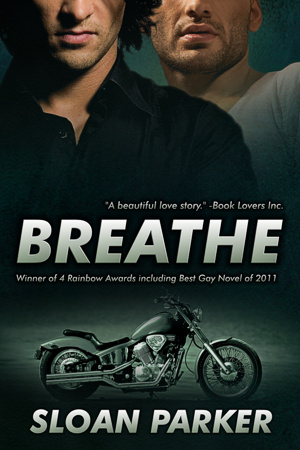
Oh, and before I go...check out the cover art for my next release, BREATHE, coming from Loose Id next month. The artist was Valerie Tibbs. Isn't it gorgeous?
Sloan Parker
www.sloanparker.com
Sep 9, 2010
The Spark of a New Idea
I recently started work on an outline for a new story that I hope I can squeeze in after my current project. For those of you following along, yes, I’m back to outlining and thinking about new plots. This one began with the spark of an idea for a specific setting and one detail about the two main characters.As I was working on the outline yesterday, it struck me that I couldn’t recall when this idea first hit me. Where had that spark came from? Had I seen something? Read something?
I’m always playing with ideas in my head, and sometimes they start out so innocuous it doesn’t register as anything important until a few days pass and a few dozen “what ifs” run through my mind. Then I start writing it all down, and the idea makes its way into my official story ideas folder.
I guess it’s okay that I don’t know where this one came from or how it started. I know where it’s going. And in the end, it’s the final product that’ll matter.
So where have some of my other ideas come from?
Anything, anywhere. TV, movies, art, news stories, overheard conversations, people watching. The smallest gesture of two people in a crowded restaurant can grow and transform into a full backstory about how these two lovers met. I play with their “story,” asking myself what if this happened? And then this? Oh, how about this? And so on…
Yes, taking me out to dinner can be a challenge.
People are fascinating. You never know what you’ll see when you discreetly watch from a distance at a restaurant, the county fair, the waiting room of the doctor’s office, or even driving down the highway.
Maybe you’ll see a teenager singing to his steering wheel. Does he have dreams of becoming the next American Idol?
Or a couple arguing through tears and shouts, their young child in the backseat chattering away to her doll. Is this a typical family squabble? Or is there something more to it? Maybe they are trying to figure out how to elude the baby’s dangerous biological father who’s just escaped from prison.
I’m sure my conclusions are nowhere near the reality of their lives, but it sure is fun to make up my own ideas…and then throw all kinds of disasters at them.
Sloan Parker
www.sloanparker.com
Aug 12, 2010
Writing When the Muse Is Asleep
The other day a writing friend told me about a workshop at the National Romance Writers of America conference that provided a list of ways writers can continue writing even when the muse is asleep. It included things like writing longhand, chewing gum, taking a shower, or doing something else with water like washing dishes.I don’t know all the details from the workshop on why these sorts of activities work, but this really hit home with me. I’ve found three things helpful when I’m stuck with a scene: writing longhand, taking a shower, and driving in my car with the radio blaring. Only one of which is actually conducive to the task of writing down any ideas that develop.
Just the other day I was stuck on the climactic scene of my new project, and I spent several hours working through the frustration, completing other work tasks, catching up on email, and reading a book on the craft of writing. Nothing was coming to me. I could not seem to figure out how to get the heroes into their biggest trouble and then how to get them out of it. I had the ending of the book planned (the romantic resolution), but I could not get the suspense storyline to come together.
I decided I’d hop on my bike for a nice ride then hit the shower. Three minutes into the shower and I was inundated with ideas, snippets of dialogue, even additional scenes for the middle part of the book. It turned into the fastest shower ever. I had to get to a piece of paper and a pen. I ran through the house, dripping water everywhere, snatching up a notebook and pen, then sat on the edge of the bathtub writing for about a half hour.
This is not the first time this has happened to me (you’d think I’d remember to take a notepad into the bathroom, but I rarely do). I’ve even mentioned it on Twitter and Facebook a few times before. I’ve written some of the best stuff wearing nothing but a towel (and sometimes less). A long soak in the bathtub is the best place for me to edit a scene that’s giving me fits.
I know I’m not alone in this. I’ve heard other writers say they also get their best ideas in the shower. You’d think more corporations would latch on to this concept and install boardroom showers. Hmmm…interesting idea there.
This got me to wondering why this (and other changes in scenery or activity) work so well on overcoming writer’s block. Is it because the activity relaxes you and eases the tension of not producing? Is it the feel or sound of water that opens up part of the brain responsible for creative thought? Does music do the same? A quick search produced several studies identifying that chewing gum can improve concentration. Maybe water, music, and driving do the same.
What do you think? Is there a benefit creatively to activities like writing longhand, chewing gum, taking a shower, or washing dishes? Or is it all in my head?
In any case, it works for me. I guess I should just invest in a waterproof digital voice recorder and save the rest of my pennies for the water bill.
Sloan Parker
www.sloanparker.com
Jul 8, 2010
Stretching the Creative Muscles
Last month I posted about my outlining process after having just finished the outline for my third romantic suspense. Before digging in to write that book, I decided to get together notes for two other stories that, if all goes well, will be waiting for me to write next year. That means I'm outlining three books back to back. That's a lot of "what ifs."Brainstorming new stories can be an exhausting process (at least for me). I have to stretch my creative muscles, push past insecurities, doubts, the mundane and clichéd ideas. Push past the first sparks of possibilities and dig deeper to find a story unique for these characters. I hope I'm coming up with something interesting. Only time (and my editor) will tell.
But it got me to thinking about where creativity comes from? Is it something innate - something we either have or do not have? Is it something that can be taught? A skill that can be honed over time?
I think it may be a combination of who we are, what we learn, the experiences we've lived through, the inspiration we take in everyday, and the continued practice of being creative over and over again. One of my favorite quotes reads..."Imagination grows by exercise, and contrary to common belief, is more powerful in the mature than in the young." -W. Somerset Maugham.
I hope that's true. I'm doing a lot of exercising of the imagination right now. And I'm certainly not getting any younger.
So what do you think? How do people generate unique ideas? And not just for writers. Creativity is useful in so many of life's problems. It can help construct business decisions, reduce spending, organize the chaotic, and save lives. Where do those ideas and the more artistic kinds of creativity come from? I'm curious to hear what you think.
Sloan Parker
www.sloanparker.com
Jun 10, 2010
Respect the Process
As a newly published author, I know I have a lot to learn and improve upon in terms of my writing. I hope to get better with each project and learn new aspects of the business of writing, but I also hope to evolve, expand my wings so to speak with the craft of writing, the process of how I write, and what I write about.I know it's an unending process. As Josh Lanyon said in his last post on this blog, "Writing doesn't get easier." (okay, I admit it…I was kinda freaked to hear that from Lanyon, but I believe it's true.)
Intellectually, I know this, and I'm prepared for the difficulties of continued publication: the work it takes to write and balance the other activities of being an author, the critiques and reviews, the deadlines.
One of the things I hadn't prepared myself for was my reaction to my own process of writing.
I'm a plotter. I plan the story and characters in detail before I begin writing. Even through the years of writing fiction that no one ever read, I had pages and pages of notes for every story (at least the ones I attempted to write).
But this time around something odd happened when I sat down to outline Trapped, the working title for my third novel-length romantic suspense (fourth if you count the one I haven't submitted yet). I panicked. Am I doing this writing thing all wrong?
I had a few details about the characters, and I knew how I wanted the romance to evolve, but the rest of the plot was slow going. Normally I wouldn't panic, just keep plugging away at ideas until something struck me as "the story" for this couple. Only this time, I was writing the outline at the same time as my first release was featured on the digital shelves at Loose Id. I had readers. I had an editor waiting for more work. I was on Twitter and Facebook. I also had new writer friends both on-line and in-person. I heard the daily progress of other writers whom I admire, other writers who had varying styles of how they work.
As the ideas slowed and panic swirled in my gut, the creative part of my brain seemed to freeze up and questions filled my mind. Should I be writing in a different way? Should I skip the outlining? Was the way I was planning the writing holding me back from getting into the story? Would I be better served if I opened up a blank document, wrote "Chapter One," and just dug into the story?
I decided to ignore the questions for the moment. I've been known to say to others that they need to go with what works for them, so I pushed aside the panic and kept working.
Now, a few weeks later, the outline for Trapped is complete at 22,000 words. It's the most detailed outline I've ever done, and I hope it's going help the rest of the words flow when I start back at writing chapter one.
 It wasn't until I got the ideas into this coherent outline that I fully relaxed. That I remembered this is how I work best. This is how my brain thinks. This is how I can come up with ideas. Brainstorming, freewriting, outlining, character sketches, research -- it's all how I find a story to tell. I can't start chapter one until I've done my own form of "due diligence."
It wasn't until I had a stack of note cards five inches high (photo included) on the desk in front of me -- a story I'm excited to tell -- that I remembered, Yeah, this is my process. And I need to respect that.
Sloan Parker
www.sloanparker.com
May 20, 2010
It Don't Come Easy

I was glancing over earlier posts on the Loose Ends and considering my own State of Word, and something struck me.
Writing doesn't get easier.
I already know this, but I have to remind myself of it periodically.
Certain aspects become easier, but those are instantly replaced by other aspects that make it just as difficult -- sometimes more difficult. for example, when you first start out, writing is difficult because you don't know what you're doing. But enthusiasm and energy carry you along. Later on in your writing career, you know what you're doing, but you realize how bad you were when you started, and you'll no longer accept that, so it's inhibiting. (There is that sort of blissful period in between when you sort of know what you're doing and you don't realize how bad you are, but it doesn't last nearly long enough.) Eventually you graduate to the level where you know what you're doing -- you write well all the time -- but you're competing against your own personal best and reader expectation (and that's the stage where the madness truly sets in).
Also, once you begin to sell, the writing machine cranks into action and you have to promote as well as write -- and that takes time. Even if you hire someone to do it for you, there is a great deal that can't be handed off to anyone else. Or maybe I'm just a control freak.

Meanwhile every book has to be better than the last. Granted, "better" is subjective. To me, "better" might be I made myself write in a new genre or I tackled a subject matter I'm uncomfortable with. For the reader, "better" will have to do with whether she or he liked the characters and the story. And of course pushing myself to do different stuff, stuff that is for me "edgy", creates its own challenges, its own pressures.
THINK HARDER!!!
(And I don't mean that merely in a writing erotic scenes context.)
There's also the fact that the more you write, the more you repeat yourself. Some of it is unconscious -- repeated words and phrases -- some of it is partly conscious and partly unconscious, but you wouldn't change it if you could because it has to do with the themes and story dynamics that interest you. But you've still got to try and examine those themes and dynamics in new ways so that readers don't get bored, and that creates a certain tension -- a good tension, the tension of creative energy, but tension nonetheless.
Plus, after you've written, oh, forty books or so, you yourself begin to get a little bored. What can you do that you haven't done before (and not alienate your reader base)? That's going to be limited by what interests you. There are plenty of stories I haven't done -- I haven't set anything in a prison, for example, or written about truckers or adopting children or menage, but those ideas don't interest me (so Mom, PLEASE stop suggesting them).
But I think the thing that makes it hardest of all is our expectation that it's going to get easy after a point. And it doesn't. It's always hard work getting it right. Drawing constantly from the creative well means you have to go further and deeper the next time. I personally feel like I have to reinvent the wheel with every book.
How did I do this the last time?
There's a certain comfort in remembering that it isn't easy and just because you're struggling doesn't mean that there's something wrong. You should be struggling. Struggling is part of the process. Creativity is a well and you get the juice the old fashioned way. It's not Sparklett's Water delivered to your door every two weeks and all you need to do is push the tap. It's hard work going and back and forth from that well, and it's okay to occasionally need to rest between the journeys -- or even drink something else for a while.
When the thirst returns, so will the strength to make it to the well.
Subscribe to:
Posts (Atom)
